
A Girl Unknown

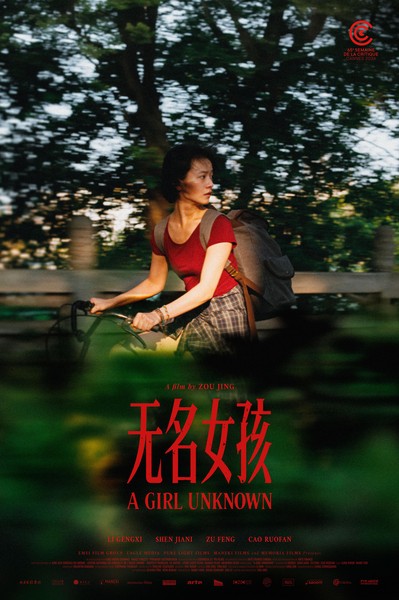
A Chinese girl is passed between three families from the age of 6 to 18, receiving each time a new name and identity. As she searches for belonging and the possibility of love, she has to navigate between the weight of her past and the uncertainty of her future - until she finds her own way.
Festivals & awards
Cannes 2026, Semaine de la Critique: Prix de la critique internationale & Prix Fondation Gan à la Diffusion
Zurich Film Festival: Special Mention
Munich Film Festival: CineVision Award
Haifa International Film Festival: Golden Anchor Award, Best Film



Credits
Pro Material




Would you like to show this movie?
Please fill out our form.
Feel free to contact us
Press voices
«Wunderschön gefilmt, beeindruckendes Schauspiel und durchs Band elegant und mühelos.» Outnow, Nora Nater
«A Girl Unknown ist das intime und zugleich weitreichende Porträt eines jungen Mädchens, das mit der Gewalt der Erwachsenenwelt konfrontiert wird. Zou Jing beobachtet ihre Protagonistin mit aussergewöhnlicher Präzision und verleiht dem Film damit eine bemerkenswerte emotionale Tiefe, die uns tief berührt hat. Ebenso beeindruckt hat uns die ästhetische Meisterschaft des Films, die ihn zu einem der am eindrucksvollsten inszenierten Werke im diesjährigen Wettbewerb macht.» ZFF-Jury
«Avec une merveilleuse délicatesse dans la description de tout son environnement, la cinéaste met en place une peinture précise qui permet de comprendre la construction d'une individualité aux failles intérieures profondes.» Mediapart